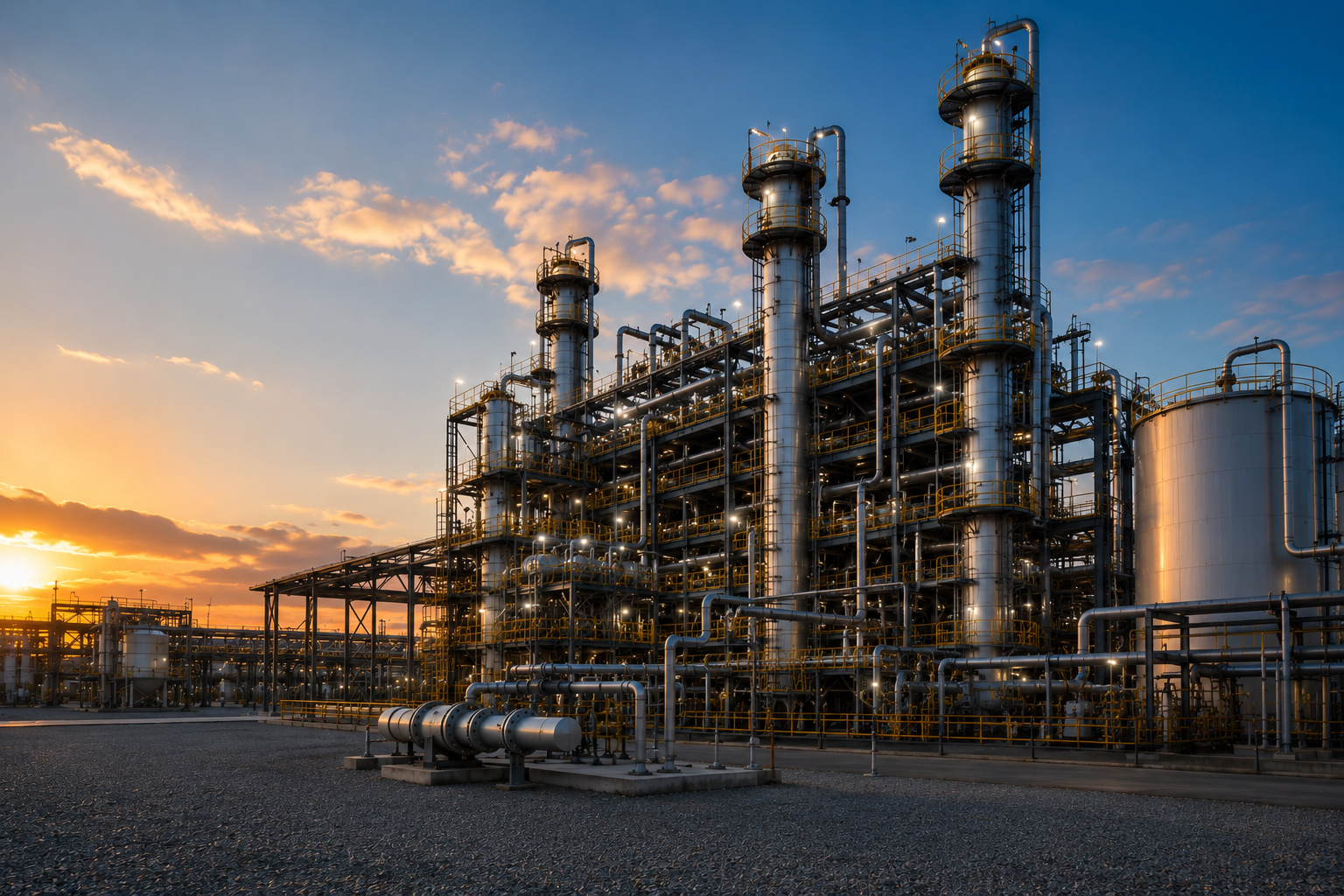
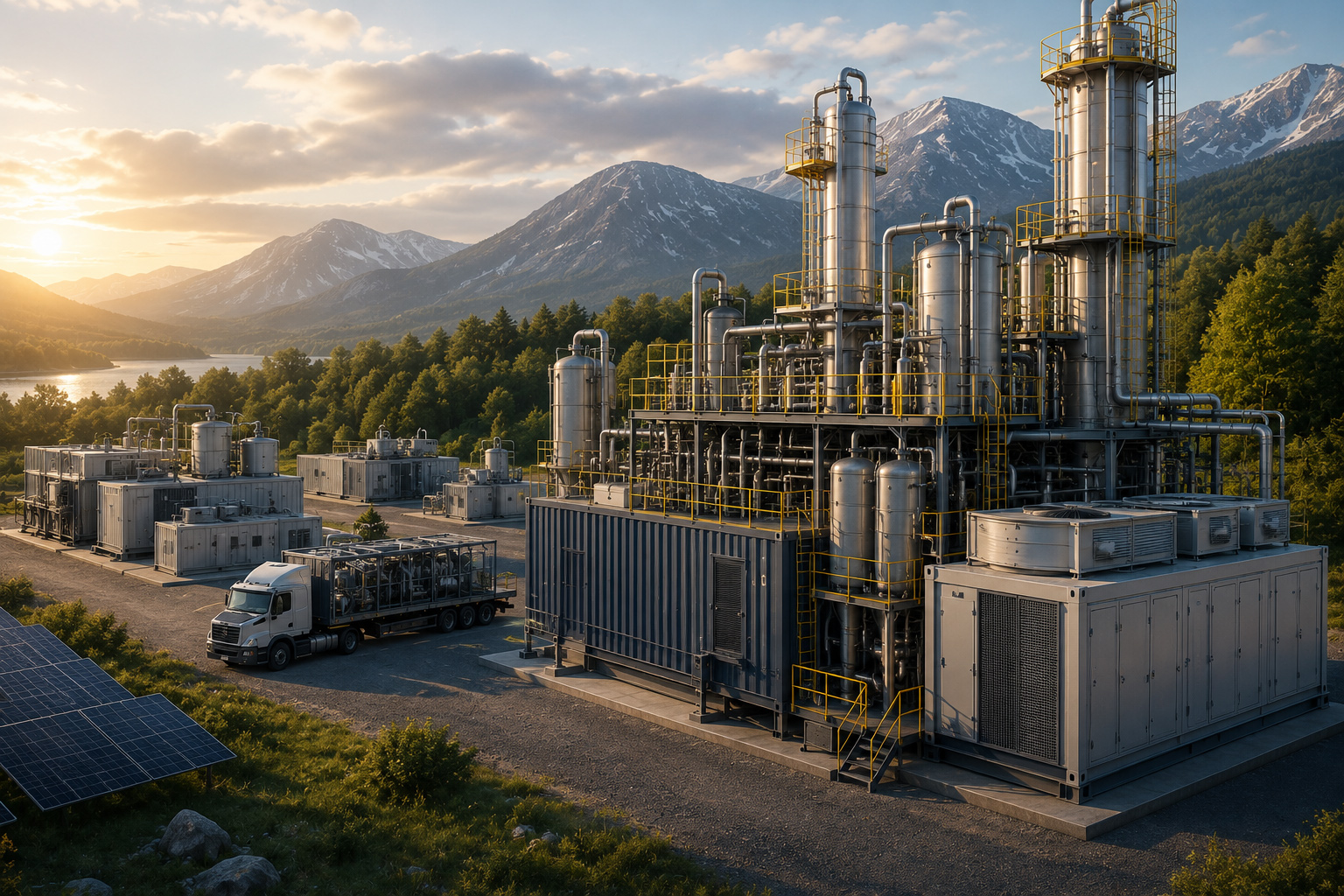
American EcoFuels™ Kepler GTL provides a modular and scalable design allowing for faster expansion and portability. Allowing each facility to be expanded, contracted or relocated as source products diminish or economic conditions change.
Self-Sufficient | In addition to our modular design, our plants generate enough power to operate the facility and can provide excess power to the community. This can reduce the strain on the local electrical grid and operating costs.
Proprietary Gas-to-Liquids (GTL) & Coal-to-Liquids (CTL) Pathways
Molecular Re-Engineering: Unlike traditional biofuels that rely on scarce fats and oils, our technology utilizes abundant feedstocks — including natural gas and coal—to build synthetic fuels from pure hydrogen and carbon.
The Catalyst Advantage: Our process features a proprietary, trade-secret catalyst module that facilitates the chemical conversion of cleaned syngas into high-value hydrocarbon chains.
Proven Fischer-Tropsch Synthesis: For coal conversion, our patented system utilizes a Fischer-Tropsch (FT) conversion area to produce long-chain hydrocarbons, followed by a product-upgrading stage to deliver "drop-in ready" fuels.
Modular Architecture: Scalability Without Geographic Limits
Rapid Deployment and Portability Our plants are built with a modular and scalable design, allowing for faster expansion and portability. Each facility can be expanded or relocated as economic conditions or feedstock sources change.
Monetizing Flared and Stranded Gas Our modular units can be deployed directly at the source, such as the Midland, Texas gas hub, to capture and monetize natural gas that would otherwise be flared into the atmosphere.
Energy Self-Sufficiency Once operational, our facilities require no external water or electricity. In fact, our process generates enough excess power to provide electricity to local communities.
Setting a New Global Standard for Fuel Purity
Eliminating Harmful Toxins at the Source The American EcoFuels™ process removes harmful chemicals during production, resulting in a fuel that is significantly cleaner than traditional fossil fuels.
Comparative Emissions Reductions:
- Sulfur Dioxide (SO2): 0% (Eliminates acid rain contributors)
- Methane (CH4): 0%
- Volatile Organic Compounds (VOCs): 0%
- Carbon Dioxide (CO2): 70% Less
- Particulate Matter: 40% Less
American EcoFuels™ Kepler GTL SAF Properties vs Other Fuel Types
| Properties | Average
(Jet A POSF 10325) | Best-Case Operability
(JP-8 POSF 10264) | JP-7 | Kepler GTL
FT-SPK (SAF) |
|---|
| Hydrogen to Carbon Ratio, (H/C) | 1.94 | 2.01 | 2.07 | 2.12 |
| Specific Energy, (MJ/kg) | 43 | 43.2 | 43.5 | 43.9 |
| Density, (kg/m3) @15°C | 803 | 780 – 800 | 779-806 | 742 |
| Energy Density, (MJ/L) | 34.5 | 33.7 | 33.7 | 32.6 |
| Avg. Molecular Weight, (g/mol) | 159 | 152 | | TBD |
| Viscosity, (cSt) | 4.6 | 3.5 | | TBD |
| Flash Point, (°C) | 48 | 42-44.5 | 60 | 44 |
| Sulphur, ppm | 400-800 | 490 | 2 | 0 |
| Specific Gravity, 16 °C (60 °F) | 0.8 | 0.81 | 0.79 | 0.76 |
| Freeze Point, °C (°F) | -47 (-53) | -51 (-60) | -44 (-47) | <-47 (-53) |
| Autoignition, °C (°F) | 210 (410) | | | 232 (450) |
| Boiling Point, °C (°F) @100kPa | 300 | | 282-288 | 300 |
| Centane | <41 | 51 | | 70 |
| CO2 Emissions, (gCO2/MJ) | 71.28 | | | ~20 |
| Viscosity at -20°C | 8 | | | 8 |
American EcoFuels™ SAF Diesel Emissions Comparison
| Test (g/bhp-hr) | HC | CO | NOx | Particulates |
|---|
| Emissions from a 5.9L Cummins engine on a test stand (Averaged results from 2 runs) |
| Diesel No. 2 | 0.1 | 1.3 | 4 | 0.1 |
| Kepler GTL Synthetic Diesel | 0.1 | 0.8 | 3.2 | 0.06 |
| Percent Reduction | 0% | 38% | 20% | 40% |
| Test (g/bhp-hr) | HC | CO | NOx |
|---|
| The University of Alexandria did another study and found… |
| Percent Reduction | 57% | 30% | 92% |
| The brake-specific fuel consumption (bsfc) decreased by 22.8% and the thermal efficiency increased by 15.6%. |
American EcoFuels™ Kepler GTL Green Diesel Properties
| Kepler GTL | ULSD |
|---|
| Heat Value (MJ/kg) | 47.3 | 42.7 |
| Carbon residue | 0.03 | 0.35 |
| Ignition quality/cetane rating | >74 | 47 |
| Active Sulphur copper strip corrosion content | 1A | 3A |
| Viscosity (mm2/Sec at 40°C) | 2 to 3 | 3.5 to 4.1 |
| Volatility/Distillation | 334 | 282 to 338 |
| Sulphur content (ug/g) | 0.2 ppm | 15.0 ppm |
| Water and sediment content | 0.05 | 0.05 |
| Flash Point | >68°C | 52 |
| Ash | 0.15 | 0.15 |